Mon Jan 08 / Dr. Abrar Al-Shaer, PhD, RD
Unseen Threats: The Impact of Everyday Chemicals on Your Hormone Health
Discover how everyday chemicals in personal care products, plastics, and cleaning supplies disrupt your hormones and contribute to conditions like endometriosis, PCOS, and fertility issues.
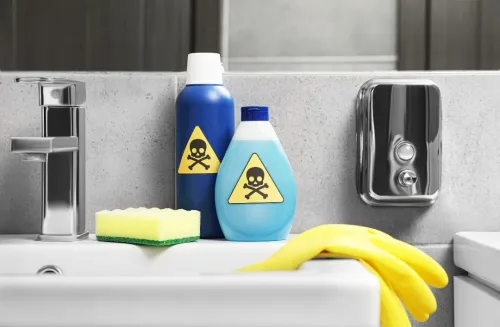
The Hidden Dangers in Your Daily Routine
On a typical day, we go about our usual routines—washing our faces, tidying up the kitchen, and storing leftovers. It all seems so ordinary, so safe. Yet, it’s in these everyday actions that unseen risks to our hormone health may be lurking.
The common items we use—from personal care products and cleaning supplies to kitchen plastics—influence our hormone health more than we realize. Fertility struggles, fibroids, or endometriosis often appear unrelated, but could there be a common factor? The reality is, almost every gynecological condition is impacted in part by environmental toxins present in our daily lives.
These risks stem from a group of synthetic chemicals known as “Endocrine Disrupting Chemicals” or EDCs (1).
Understanding Endocrine Hormones: Your Body’s Messengers
Endocrine hormones function like diligent messengers for our bodies. Their mission is to regulate functions ranging from puberty development and energy metabolism to fertility, ovulation, menstruation, mood, mental health, skin health, and even heart rate.
Imagine an orchestra where each instrument plays a crucial role. In this symphony of the body, endocrine hormones are the conductors, ensuring harmony and rhythm. But just as a single misstep from the conductor can throw the entire orchestra into discord, minor disturbances in our hormones can trigger symptoms throughout our bodies.
EDCs are chemicals that “disrupt” our hormones; they can interfere with estrogen and progesterone signaling, thyroid function, and many other crucial hormones involved in metabolism (2).
Endocrine Disrupting Chemicals (3) can:
- Falsely mimic our hormones, “pretending” to act like estrogen
- Block our hormones from functioning properly
- Alter hormone levels and production
EDCs are especially problematic during critical growth stages like fetal development, affecting both organ development (4) and neurodevelopment, potentially increasing risks of neurological conditions (5).
Minimizing Your EDC Burden: Key Offenders to Know
While it’s impossible to avoid EDCs completely, the goal is to minimize exposure to lower the burden on your body. Some of the key offenders include:
PFAS: Non-Stick’s Dark Secret
What they are: Per- and Polyfluoroalkyl Substances (PFAS) (6) are man-made chemicals commonly known as “non-stick” chemicals or TEFLON (7).
Health risks: PFAS are linked to fertility struggles (potentially lowering fertility by 40%!) (10), uterine fibroids, PCOS (11), brain defects (12), and increased breast cancer risk (13).
Where they lurk: Non-stick cookware, waterproof/stain-proof clothing, food packaging (microwave popcorn bags, fast-food wrappers), and even some dental floss brands (8, 9).
How to minimize exposure: Replace non-stick cookware with cast-iron or stainless steel, avoid “non-stick” labels (including “PFAS-free” marketing claims), choose biodegradable dental floss, and pop popcorn kernels yourself without microwave bags.
BPA/BPS: Synthetic Estrogen Threats
What they are: Bisphenol A and Bisphenol S (14) are synthetic estrogens that can mimic or disrupt estrogen in our bodies.
Health risks: Associated with worsening PCOS and endometriosis symptoms (15-16), subfertility (17), increased period pain (18), and potential breast cancer risk (19).
Where they lurk: Plastic water bottles, food containers, toys, canned foods, thermal paper receipts, perfumes, lotions, hair sprays, and detergents (20-23).
How to minimize exposure: Choose electronic receipts, select BPA-free canned products, exercise caution with perfumes and chemical-laden personal care products, and choose cleaning products with minimal chemicals.
Phthalates: Plastic’s Silent Threat
What they are: Phthalates (pronounced thal-ates) are chemicals used to increase plastic flexibility, transparency, and durability (24).
Health risks: Associated with diabetes, PCOS, endometriosis risk, reduced fertility, increased allergy and asthma risk, and sleep disruptions (25-30).
Where they lurk: Plastic containers, vinyl flooring, adhesives, fabric softeners, air fresheners, detergents, lubricating oils, raincoats, tampons, and feminine hygiene products (22, 25).
How to minimize exposure: Choose fragrance-free cosmetics and cleaning products, replace plastic containers with stainless steel or glass, and select biodegradable or organic feminine hygiene products.
Navigating Product Choices: Practical Tools
Feeling overwhelmed? The Environmental Working Group (EWG) provides comprehensive databases to guide you through potentially harmful chemicals:
- EWG Guide to Healthy Cleaning Database: Search products and choose those with A or B grades
- EWG Skin Deep Cosmetics Database: Stick to products with scores of 4 or less
Debunking the “Dose Makes the Poison” Myth
The principle “the dose makes the poison” is inaccurate for environmental toxins since even low doses can have substantial impacts (31). Our bodies, which didn’t evolve alongside these chemicals, can be highly sensitive to them even at low concentrations.
Moreover, we’re exposed to countless unknown chemicals, and the combination of many low doses from different sources may cause harm. Chemicals that bioaccumulate in our bodies over time present additional unknown risks.
Taking Empowered Action
Understanding endocrine-disrupting chemicals might seem daunting, but knowledge empowers you to make better choices. Focus on small, informed changes—even one change every few months is progress.
Our bodies are resilient, and our liver works tirelessly to detoxify as much as it can. Each step you take helps lower the burden on your body, promoting better hormone health and reducing your risk of chronic diseases.
References
- Diamanti-Kandarakis E, et al. Endocrine-disrupting chemicals: an Endocrine Society scientific statement. Endocr Rev. 2009.
- Egalini F, et al. Endocrine disrupting chemicals: effects on pituitary, thyroid and adrenal glands. Endocrine. 2022.
- Schug TT, et al. Endocrine disrupting chemicals and disease susceptibility. J Steroid Biochem Mol Biol. 2011.
- Leung Y-K. A silent threat: exploring the impact of endocrine disruption on human health. Int J Mol Sci. 2023.
- Why phthalates should be banned in consumer products. Harvard T.H. Chan School of Public Health.